
Trump’s Tariff Mirage: Dangling Tax Cuts and Dividend Dreams Amid Fiscal Reality

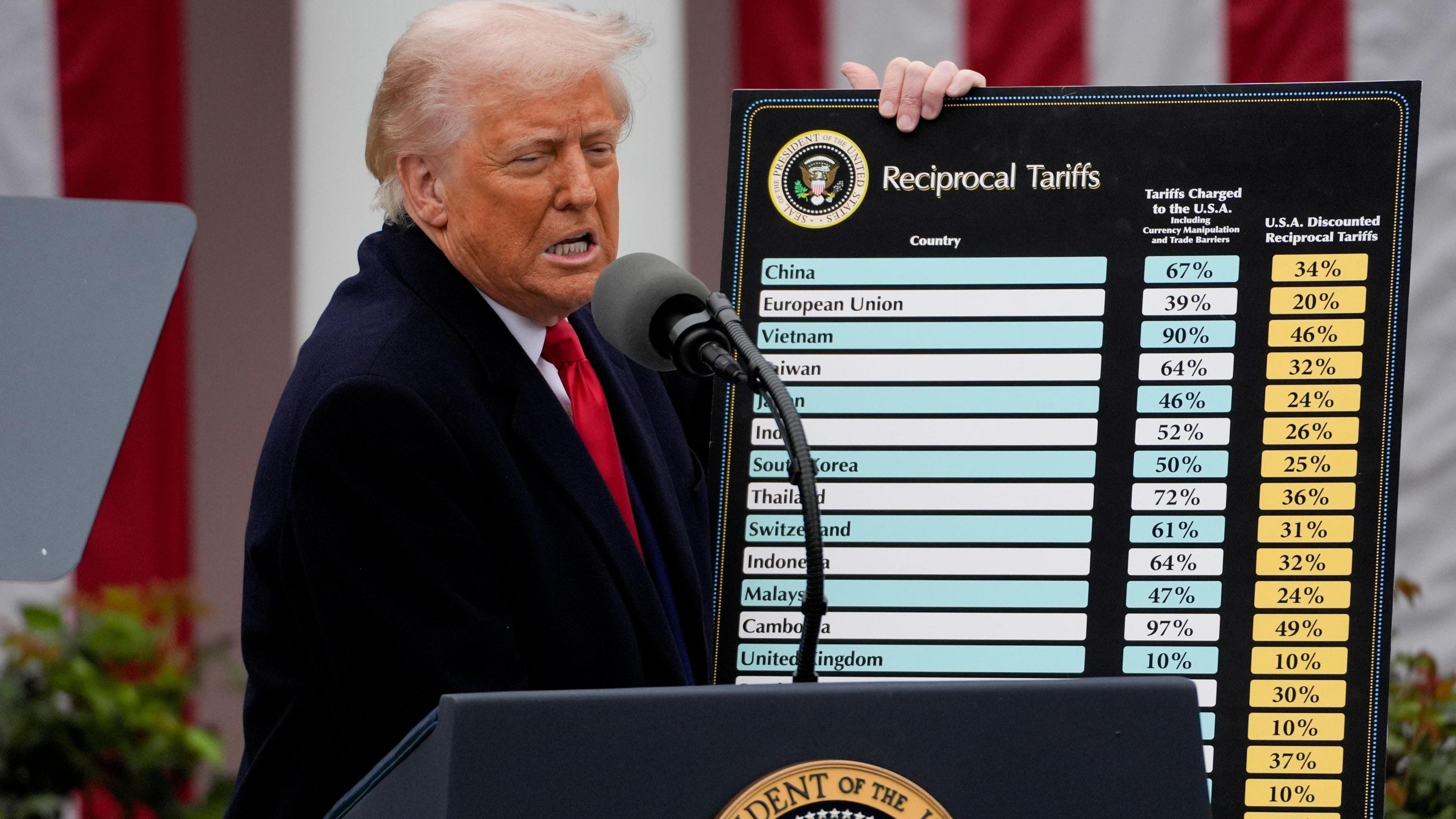
In the shadow of a ballooning $36.4 trillion national debt, President Donald Trump’s latest economic flex—floated during a December 2, 2025, cabinet meeting—has reignited debates on federal revenue like few others. “I believe that at some point in the not-too-distant future, you won’t even have income tax to pay,” Trump declared, crediting his aggressive tariff regime for generating “enormous” funds that could supplant the $2.7 trillion hauled in from individual income taxes last fiscal year.
He sweetened the pitch with a promised $2,000 “dividend check” for Americans earning under $100,000, framing it as a direct rebate from tariff windfalls. It’s red meat for his base: a vision of fatter paychecks, exploding growth, and a return to America’s “richest” tariff-fueled heyday. Yet, as 2025’s fiscal data rolls in, this narrative crumbles under scrutiny. Tariffs, while up dramatically, remain a drop in the revenue bucket—$195 billion in FY 2025, or about 7% of income tax hauls.
Scrapping the income tax would demand draconian spending cuts or a pivot to consumption-based alternatives, neither of which aligns with Trump’s track record or the entrenched interests profiting from the status quo. This isn’t bold reform; it’s unsubstantiated salesmanship, echoing unkept DOGE pledges and historical overpromises.
The Pitch: Tariffs as the New Taxman, With Checks in the Mail
Trump’s tariff crusade, ramped up via executive orders under the International Emergency Economic Powers Act (IEEPA), has indeed juiced customs duties. From $77 billion in FY 2024 to $195 billion in FY 2025—a 153% surge—driven by hikes on China (up to 145%), universal 10-20% rates, and targeted levies on autos, steel, and EVs. Proponents hail it as a masterstroke: Foreign producers foot the bill, reshoring jobs, and funding American largesse. Enter the $2,000 dividend: Rolled out in November Truth Social posts, it’s pitched as a “thank you” to middle-income earners (under $100k, per clarifications), excluding “high-income people.” Trump tied it to “trillions” in tariff revenue, vowing mid-2026 payouts to offset consumer pain from higher import costs.
On X, the hype is electric. “If Trump replaces federal income tax with tariffs, he will go down as the greatest president since George Washington,” one viral post proclaimed, amassing 19k likes. Another echoed: “The economy would explode overnight. 🚀” with 25k engagements. Trump amplified the buzz in a PBS-clipped cabinet rant: “Whether you get rid of it, or keep it around for fun, or have it really low… you’re not going to have income tax to pay.” It’s populist poetry, evoking a pre-income-tax era when tariffs bankrolled prosperity without “stealing” from workers.
But the math mocks the magic. That $2,000 check for ~150 million qualifying adults? A cool $300 billion tab, per Tax Foundation estimates—more than double FY 2025’s total tariff haul. Even optimistic projections (e.g., $600 billion annually from escalated rates) fall short of income taxes by over $2 trillion. And as X skeptics note: “Trump’s claim… is mathematically baseless. It would take U.S. ports decades… to handle five times import volume.” Higher tariffs don’t linearly boost revenue; they shrink imports, curbing the base. The Laffer curve for tariffs peaks at 50% rates yielding ~$780 billion—still a fraction of needs.
Echoes of Empty Promises: DOGE Déjà Vu
This isn’t Trump’s first fiscal fairy tale. Recall the Department of Government Efficiency (DOGE), his January 2025 brainchild co-led by Elon Musk. Hyped as a trillion-dollar slasher of “waste, fraud, and abuse,” it dangled $5,000 “dividends” from savings—mirroring today’s tariff rebates. 81 Musk boasted of $2 trillion in cuts; the reality? A whimpering shutdown in November, with just $214 billion “saved” by DOGE’s inflated ledger—less than 11% of the lowball goal. Legal snags, protests from axed feds (thousands laid off), and zero transparency tanked it. As Reuters quipped: “DOGE doesn’t exist” eight months early.
Tariff dividends risk the same fate. Treasury’s Scott Bessent hedged on Fox: It “could come in lots of forms… no tax on tips, overtime.” Not checks—rebadged cuts from July’s GOP tax bill. X users smell the bait: “Trump lied about DOGE ‘dividends’ that never came. His chatbot just admitted it.” With the Supreme Court eyeing IEEPA’s legality (justices skeptical on November 25), even current revenues hang by a thread.
The Fiscal Chasm: Debt Dwarfs Duties, Tariffs a Trickle
Zoom out: FY 2025’s $1.8 trillion deficit—despite tariff bumps—pushed public debt to $29 trillion (99.8% of GDP). Income taxes? $2.7 trillion, half of total revenue. Tariffs? A measly 3-4% slice, even post-surge. Economists like Dean Baker (CEPR) crunch it bluntly: Replacing income taxes would balloon deficits by $2.3 trillion annually, as tariffs max at $280 billion. Retaliation from China/EU (already hitting $223 billion in U.S. exports) shrinks GDP by 0.7%, eroding more revenue.
Nixing income taxes demands slashing spending by 40%—eviscerating Social Security, Medicare, defense (Trump’s no-go zones). Or pivot to consumption taxes: A 20-30% national sales/VAT could bridge the gap, but it’s regressive, hammering low earners (who spend 80% of income on goods) while sparing the wealthy. Trump’s floated it vaguely, but as X posts warn: “If Trump replaces… with tariffs, we are all screwed.”
Unconstitutional Heist: From Founders’ Tariffs to Fed’s Fiat
Historically, Trump’s got a kernel of truth. Pre-1913, tariffs funded 90% of the feds—$305 million in Civil War era, fueling growth sans income levy. The 16th Amendment birthed income tax for “the wealthy,” but greed metastasized: Post-WWI, it ballooned, now devouring middle-class paychecks at rates dwarfing ancient Egypt’s corvée (10-20% labor) or Meiji Japan’s land levies (3-5%). Critics call it “stealing earned income”—unconstitutional under originalism, as Article I empowers Congress for “Duties, Imposts” (tariffs), not direct wage grabs.
Yet the Fed flips the script: Printing $9 trillion since 2020 via fiat (not fractional reserves alone) inflates away savings, rendering taxes obsolete for funding. Why tax? Control. The IRS—$14 billion budget, 80k agents—plus adjacent auditors/lawyers feast on compliance costs ($500 billion yearly). Value-added/sales taxes? Constitutional, efficient, voluntary (spend less, pay less). We thrived on tariffs for 130 years; reverting could unleash innovation, sans the “thievery.”
But entrenched lobbies (defense contractors, welfare industrialists) won’t yield. Trump’s “all-tariff policy” (floated June 2024) ignores this; it’s carrot-dangling for votes, not viable policy.
The Carrot’s Shadow: Innovation’s Illusion, Control’s Grip
Evolutionarily, promises like these propel competition—Trump’s bluster spurs rivals to counter. But substantiation? Zilch. As one X thread laments: “Y’all know he’s FOS… debt went up almost 3 trillion.” Tariffs as control mechanism? They distort markets, hiking household costs $1,200 yearly. True reform: Audit the Fed, slash expenditures 20%, adopt a 15% national sales tax. Trump’s talking “out of his ass,” as critics charge, but the allure endures.
In 2026’s midterms, watch: Dividends delayed, taxes intact, debt deeper. History whispers: Prosperity came from free enterprise, not fiat fantasies. Demand real math, not memes—before the carrot turns to stick.