
The Swift Demise of DOGE: A Bold Vision Betrayed by Bureaucratic Inertia and Corruption

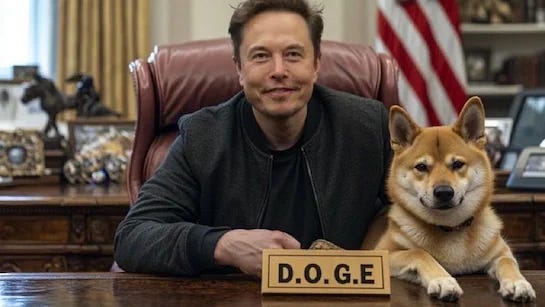
In a move that underscores the entrenched resistance to reform in Washington, the Department of Government Efficiency (DOGE)—President Donald Trump’s ambitious initiative to slash federal waste—has been quietly disbanded, just eight months shy of its July 2026 charter expiration.
Launched with fanfare in January 2025 under the leadership of Elon Musk and Vivek Ramaswamy, DOGE promised to be the “Manhattan Project” of fiscal responsibility, targeting up to $2 trillion in cuts to the bloated federal budget.
Yet, as confirmed by Office of Personnel Management Director Scott Kupor, “That doesn’t exist” anymore. The dissolution, reported by Reuters on November 23, 2025, marks not just the end of a centralized entity but a stark reminder of how half-hearted commitments and systemic corruption can doom even the most audacious reforms.
DOGE’s inception was a populist thunderclap. Trump, fresh off his 2024 victory, signed an executive order on his first day to create the advisory body, embedding its teams across agencies to audit spending, enforce a government-wide hiring freeze, and dismantle redundant programs. Musk, wielding a symbolic chainsaw at CPAC, vowed to “delete the mountain” of regulations, while Ramaswamy pushed for AI-driven overhauls and the elimination of entire departments like USAID.
Early actions were disruptive: tens of thousands of federal workers were fired or prompted to leave, contracts were axed, and IT systems were scrutinized for fraud. By April 2025, Musk claimed $150 billion in savings—though fact-checkers dismissed it as exaggerated, with independent estimates pegging actual cuts closer to $214 billion, a mere fraction of the trillion-dollar goal.
But here’s the bitter truth: America never went all in on DOGE. From the start, it was hobbled by a lack of real authority. As an advisory commission rather than a full-fledged department (Congress never granted it that power), DOGE relied on executive persuasion and agency buy-in.
The hiring freeze, meant to replace every four departing employees with just one, crumbled under exceptions for immigration enforcement and public safety—priorities that ballooned rather than reduced headcounts. Bureaucracy wasn’t just the target; it was the shield. Agencies dragged their feet on audits, citing legal hurdles and “essential services,” while congressional appropriators like House Oversight Chair Tom Cole warned of overreach into their turf.
The result? A reduction in bloat that was more cosmetic than structural. Federal spending held steady at around $7 trillion for fiscal year 2025, per Congressional Budget Office data, with the deficit unmoved and the national debt surging past $36 trillion. DOGE exposed the rot but couldn’t excise it, proving that true efficiency demands congressional scalpel, not just presidential rhetoric.
Compounding the half-measures was the heartbreaking absence of promised “DOGE dividends”—refund checks to taxpayers that could have tangibly lightened the debt burden. The concept, floated early by investment manager James Fishback and endorsed by Musk, envisioned redistributing 20% of savings directly to Americans as tax refunds, with another 20% funneled to debt reduction.
Trump himself teased $5,000 checks per taxpayer in February 2025, funded solely by DOGE’s efficiencies, arguing it would empower citizens and curb inflation by prioritizing savings over spending. Vivek Ramaswamy amplified the idea, calling it a “dividend on your stolen money.” Per capita, the U.S. national debt stood at over $107,000 by late 2025—a suffocating load on every man, woman, and child.
Had even the disputed $214 billion in savings materialized as refunds, it could have shaved thousands off that figure per household, fostering investment and debt paydown while signaling accountability. Instead, no checks arrived. The funds? Absorbed into agency black holes or offset by new spending in Trump’s “One Big Beautiful Budget Act,” which added $5.2 trillion to the debt. This betrayal wasn’t oversight; it was a missed opportunity to make fiscal restraint feel real, turning abstract trillions into pocketbook relief.
At its core, DOGE’s downfall reveals a deeper malaise: too many vested interests thrive on bloat and waste, rendering genuine reform an existential threat. Government agencies, lobbyists, and contractors form a symbiotic web that profits from inefficiency—embezzlement schemes siphoning contracts, money laundering through opaque grants, and the perverse incentive of spending “other people’s money” with zero skin in the game.
DOGE uncovered fraud in health systems and foreign aid, but pushing further invited backlash. USAID’s dismantling saved lives? Critics claimed 300,000 child deaths from aid cuts, ignoring how much went to corrupt intermediaries. Social Security delays from DOGE-mandated efficiencies? Blamed on “heartless” reforms, not the prior waste.
Corrupt actors—unelected bureaucrats, entrenched unions, and even some GOP appropriators—loved the status quo. Why dismantle a system where $500 billion vanishes annually into unauthorized regulations and duplicated programs? As Musk lamented in May 2025 before his feud with Trump led to his exit, the “tyranny of the bureaucracy” isn’t accidental; it’s engineered.
Great in concept, DOGE was a meme-worthy rallying cry against Washington’s leviathan, blending Silicon Valley disruption with MAGA populism. It briefly galvanized a nation weary of $36 trillion in IOUs. But too many corrupt players—those who embezzle via no-bid deals, launder through NGO fronts, and treat taxpayer dollars as an infinite ATM—quietly shut it down.
Staffers packed up in June amid Musk-Trump tensions, functions folded into the Office of Personnel Management, and the hiring freeze lifted without fanfare. Kupor insists the “principles remain alive,” but that’s cold comfort. DOGE’s quiet death isn’t victory for efficiency; it’s a win for the waste-mongers.
As we reflect on this fizzling experiment, the lesson is clear: Half-hearted audits and advisory chainsaws won’t suffice. True change demands all-in political will, ironclad legal teeth, and a public revolt against the cronies who prefer debt servitude to deliverance. DOGE may be gone, but its ghost haunts every unchecked budget line— a reminder that until we demand refunds, not excuses, the bureaucracy wins.