
Poland Bans Homework for Young Children: A Bold Step to Reclaim Play and Childhood

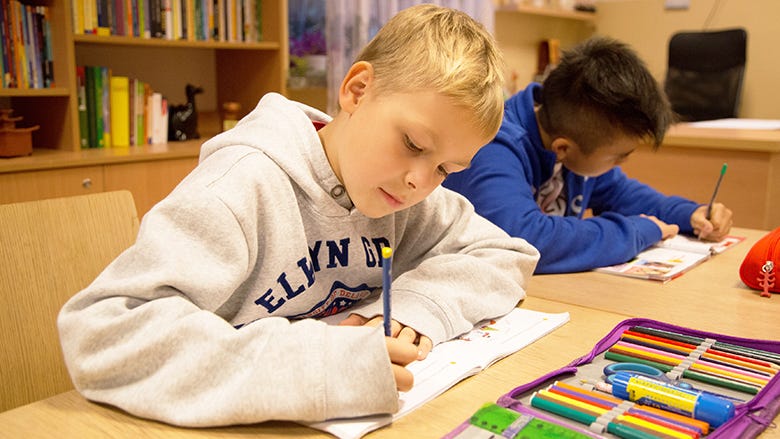
In April 2024, Poland became the first country in Europe to implement a nationwide homework ban for its youngest students. Starting in the 2024–2025 school year, children in grades 1–3 (ages 7–9) are completely exempt from mandatory homework, while students in grades 4–8 (ages 10–15) may only receive optional, ungraded assignments.
Poland’s Minister of Education, Barbara Nowacka, framed the reform as a direct response to mounting evidence that excessive homework harms children’s health, family life, and love of learning. The goal is simple yet revolutionary: protect unstructured playtime as a biological and developmental necessity.
The Science: Why Play Is Non-Negotiable for a Child’s Brain
Human learning evolved long before classrooms existed. For hundreds of thousands of years, children acquired knowledge through self-directed exploration, play, and imitation in rich natural and social environments. Neuroscientists and developmental psychologists now confirm what evolution already “knew”:
Play builds executive function better than worksheets. Studies from the University of Cambridge (2018) and the American Academy of Pediatrics (2018) show that free play – especially pretend play, physical play, and outdoor exploration – strengthens the prefrontal cortex, improving attention, emotional regulation, problem-solving, and working memory far more effectively than rote exercises.
Chronic stress from academic pressure harms developing brains. Duke University research (Harris Cooper, 2006; updated meta-analyses 2019) found that homework in elementary years provides virtually zero academic benefit, yet correlates with increased anxiety, sleep deprivation, and physical symptoms like headaches and stomach aches. Prolonged cortisol elevation literally shrinks the hippocampus – the brain region critical for memory consolidation.
Active bodies support active minds. A 2021 meta-analysis in Pediatrics concluded that every additional hour of physical activity per day improves academic performance, especially in math and reading. Poland’s reform explicitly aims to give that hour back: children who currently spend 2–4 hours on homework after a 6–8-hour school day will now have time to run, climb, build, and imagine.
In short, our biology is wired for discovery-based learning, not prolonged seated compliance. Forcing a 7-year-old to sit still for another two hours doing worksheets fights against 300,000 years of evolutionary design.
What the Evidence Says About Homework in Early Years
The research is remarkably consistent:
A landmark 2006 Duke University review (updated 2019) concluded that homework in primary school has “zero to negligible” effect on test scores.
The OECD’s PISA data repeatedly shows no correlation – and sometimes a negative correlation – between time spent on homework and academic outcomes in children under 12.
Countries that assign the least homework in early grades (Finland, Estonia) consistently rank at the top of global education indices.
Yet many education systems still treat homework as a proxy for rigor. Poland’s reform acknowledges the uncomfortable truth: for young children, extra drill after a full school day is largely wasted time.
A Cultural Shift Toward Childhood
The Polish ban goes beyond academics. Parents report that evenings once filled with battles over math sheets are now spent playing board games, reading for pleasure, or simply talking. Teachers, freed from grading stacks of repetitive exercises, can focus on richer in-class activities. Early feedback from the 2024–2025 school year shows higher attendance, fewer behavioral issues, and – paradoxically – improved reading fluency, as children finally have time to read books they actually enjoy.
Critics worry about “falling behind,” but the data from Finland (which introduced a similar policy decades ago) is reassuring: Finnish 15-year-olds still outperform most of the world despite almost no homework before age 13.
A Model for the World?
Poland’s experiment is being closely watched. If the predicted gains in well-being, creativity, and long-term academic motivation materialize – and early signs are promising – other nations may follow. The message is clear: childhood is not a miniature adulthood. A seven-year-old’s job is not to prepare for university; it is to play, explore, and grow a healthy brain through joy and movement.
By banning homework for its youngest citizens, Poland isn’t lowering standards – it’s raising them to match what science, evolution, and common sense have been telling us all along: let children be children. Their brains – and their futures – will thank us for it.