
Dual Citizenship: A Loyalty Crisis Undermining American Public Service

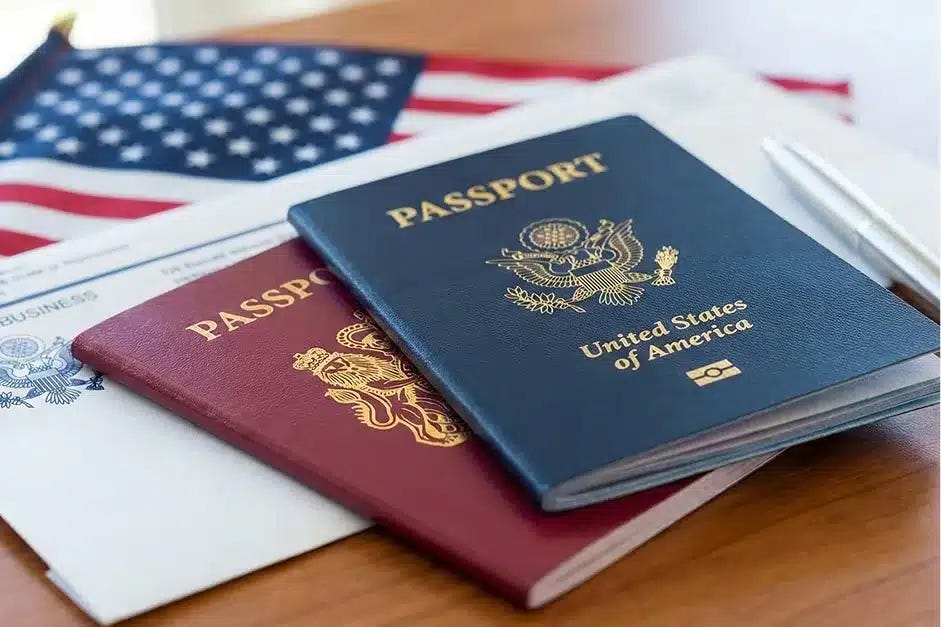
In an era of global interconnectedness, dual citizenship—holding passports from two nations—has become increasingly common among Americans. Yet, when it extends to public servants, from congresspeople to high-level officials, it poses a profound dilemma: divided allegiances that could compromise national interests.
The U.S. Constitution demands undivided loyalty to America, making it inherently problematic—and arguably unconstitutional—for politicians to prioritize or even share fealty with foreign entities. This extends beyond mere policy preferences to the core of citizenship itself, where dual status risks eroding the oath to “support and defend the Constitution… against all enemies, foreign and domestic.” As recent legislative pushes highlight, the time has come to scrutinize how dual citizenship in government threatens sovereignty, tracing its origins and outlining the perils it introduces.
The roots of dual citizenship in the United States are not ancient tradition but a relatively modern evolution, born from legal shifts rather than foundational intent. The original U.S. Constitution of 1787 established a form of dual citizenship between the national and state levels, as seen in provisions like the diversity jurisdiction in Article III.
However, international dual nationality was historically viewed with suspicion. Founding-era thinkers, influenced by Enlightenment ideals of singular sovereignty, saw multiple allegiances as incompatible with republican governance.
Theodore Roosevelt, in a 1915 article, famously derided dual nationality as a “self-evident absurdity,” arguing it fostered divided loyalties akin to bigamy.
Before World War II, U.S. law made it extremely difficult for Americans to retain foreign citizenship, often requiring renunciation upon naturalization. This changed dramatically in 1967 with the Supreme Court’s decision in Afroyim v. Rusk, which struck down laws automatically revoking U.S. citizenship for acts like voting in foreign elections, affirming that citizenship could only be relinquished voluntarily.
Today, dual citizenship arises automatically—via birth abroad to U.S. parents or naturalization without full renunciation—allowing millions to hold multiple passports by “operation of different laws,” as the State Department notes. This shift, while promoting personal freedoms, has inadvertently opened doors to conflicts in public life.
Constitutionally, dual citizenship for politicians clashes with the framers’ vision of undivided loyalty. The Constitution doesn’t explicitly ban dual citizens from office—save for the natural-born requirement for the presidency in Article II—but it implicitly demands exclusive allegiance.
The Oath of Allegiance for naturalized citizens requires renouncing “all allegiance and fidelity” to foreign powers, a principle that should extend to all public servants. Prioritizing a foreign entity over America is not just unethical; it’s a betrayal of the Supremacy Clause in Article VI, which declares the Constitution the “supreme Law of the Land.”
Critics argue this makes dual loyalty unconstitutional, as it could lead to decisions swayed by external influences, violating the Emoluments Clause’s spirit against foreign entanglements. Recent proposals underscore this tension: On December 3, 2025, Senator Bernie Moreno (R-OH) introduced the Exclusive Citizenship Act, aiming to prohibit dual citizenship outright, with non-renunciation leading to loss of U.S. status.
While opponents call it unconstitutional—citing the 14th Amendment’s citizenship protections and Afroyim’s precedent—the bill highlights growing concerns that shared citizenship inherently prioritizes foreign ties. Legal analysts debate its viability, but the push reflects a consensus that dual status in office undermines the “sole and exclusive allegiance” Moreno’s legislation demands.
The problems for dual citizens in government are manifold, centering on inevitable conflicts of interest and security risks. Public servants with foreign passports may face divided loyalties, especially in foreign policy or national security roles.
For instance, a dual citizen legislator could subconsciously—or deliberately—favor their other homeland in trade deals, military aid, or intelligence sharing, creating “real or apparent conflicts,” as noted in analyses of judicial and executive positions.
The State Department has long grappled with this, advising dual citizen employees that foreign allegiance could bar security clearances. A 2025 report from the Center for Immigration Studies called for banning dual citizens from classified access, arguing it’s “permissible—and overdue” to mitigate threats.
Historical examples abound: Dual nationals have been implicated in espionage scandals, and even benign cases raise red flags, like when officials’ decisions align suspiciously with foreign interests. In Congress, Representative Randy Fine (R-FL) introduced the Disqualifying Dual Loyalty Act in October 2025, barring foreign citizens from serving, emphasizing that “divided loyalties” threaten democracy.
Broader societal views echo this: Online forums decry dual citizenship as an “escape plan” that encourages risky governance, while experts warn it erodes public trust. For national leaders crafting foreign policy, holding another citizenship is particularly fraught, as Forbes highlighted in 2020, noting it could bias decisions amid global tensions. RAND Corporation research in 2025 further identifies “conflicting allegiances” as a key clearance factor, urging vigilance.
Ultimately, dual citizenship in public service isn’t just a personal choice—it’s a national vulnerability. Originating from mid-20th-century legal leniency, it now clashes with constitutional imperatives for loyalty. As bills like Moreno’s gain traction, America must reckon with reforming citizenship laws to ensure officials serve one flag alone. Without action, the republic risks internal fractures from those sworn to protect it, proving Roosevelt’s “absurdity” all too prescient. In safeguarding sovereignty, exclusive allegiance isn’t optional—it’s essential.