
A Stolen Lifeline: When FEMA Funds Fuel Political Ambition

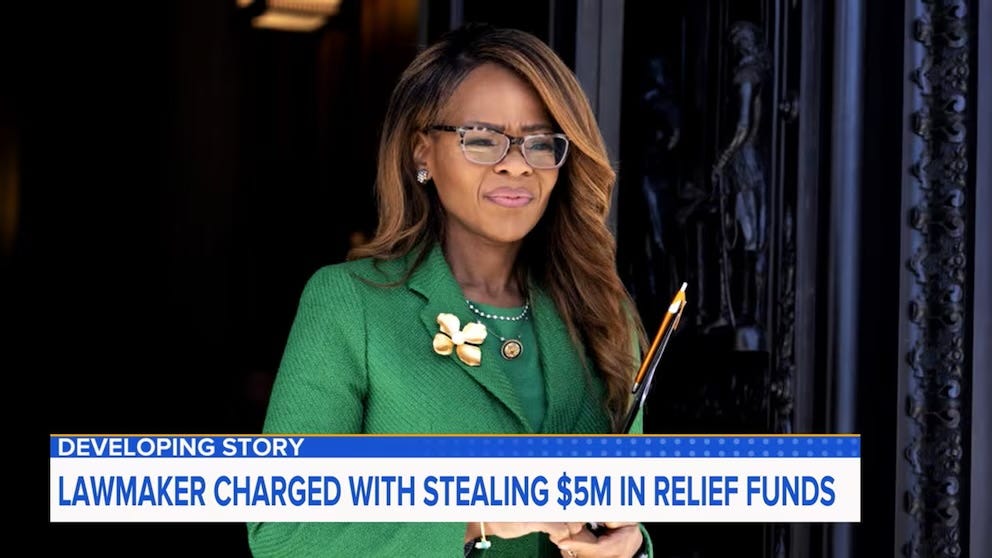
In the shadow of America’s ongoing battles with natural disasters and public health crises, a shocking indictment has ripped back the curtain on one of the most egregious abuses of federal trust.
On November 19, 2025, the U.S. Department of Justice unsealed charges against Democratic Congresswoman Sheila Cherfilus-McCormick of Florida, accusing her of orchestrating the theft of $5 million in Federal Emergency Management Agency (FEMA) funds—money intended to safeguard vulnerable communities during the COVID-19 pandemic.
This isn’t just a tale of financial misconduct; it’s a stark reminder of how unchecked government power breeds corruption, eroding the very foundations of liberty our Constitution enshrines. As libertarians have long warned, when government swells beyond its enumerated bounds, accountability evaporates, and the people’s resources become playthings for the powerful.
The scheme, laid bare in a Miami federal grand jury indictment, reads like a thriller scripted by fiscal hawks. Cherfilus-McCormick, 46, and her brother Edwin Cherfilus, 51, allegedly exploited a FEMA contract awarded to their family-owned Trinity Healthcare Services in 2021.
The company was tasked with staffing COVID-19 vaccination sites—a noble endeavor on paper, funded by taxpayer dollars to protect public health. But in July 2021, Trinity received an inexplicable overpayment of $5 million from FEMA. Rather than return the windfall, the siblings are accused of laundering it through a labyrinth of bank accounts, disguising its origins to funnel the bulk toward Cherfilus-McCormick’s nascent congressional campaign.
Co-conspirators, including her aide Nadege Leblanc, reportedly orchestrated “straw donor” schemes, routing portions of the pilfered funds to friends and relatives who then donated to the campaign under their own names, masking the illicit source. The result? A special election victory in Florida’s 20th District in January 2022, where Cherfilus-McCormick captured 72% of the vote, all propped up by disaster relief dollars that should have vaccinated the needy, not greased political wheels.
Facing up to 53 years in prison on charges including theft of government funds, money laundering, and conspiracy, Cherfilus-McCormick embodies a bipartisan truth: politicians, once ensconced in power, too often treat public coffers as personal ATMs.
House Democratic Leader Hakeem Jeffries has offered a tepid “innocent until proven guilty” defense, while Republican Rep. Greg Steube vows expulsion proceedings—a rare flash of cross-aisle fury. Yet this case isn’t isolated; it’s the tip of a corrupt iceberg. FEMA’s parent agency, the Department of Homeland Security, has faced repeated scandals, from wasteful hurricane relief contracts to billions in unaccounted COVID aid.
Zoom out, and the rot spreads: The IRS has been caught in whistleblower exposés for targeting political foes; the Department of Veterans Affairs has buried veterans’ waitlist deaths under bureaucratic bloat; and agencies like the EPA routinely dole out grants to cronies with scant oversight. A 2024 Government Accountability Office report tallied over $200 billion in improper federal payments annually—embezzlement by any other name. These aren’t anomalies; they’re symptoms of a leviathan government, far removed from the slim, accountable republic envisioned by the Founders.
From a constitutional lens, this betrayal strikes at the heart of limited government. The framers, steeped in Enlightenment skepticism of centralized power, crafted Article I, Section 8 to enumerate Congress’s powers narrowly—coin money, declare war, regulate commerce among states—explicitly omitting vast welfare bureaucracies like FEMA, born of 1979’s executive fiat under President Carter.
James Madison warned in Federalist No. 51 that “if men were angels, no government would be necessary,” but without checks like a balanced budget or term limits, ambition begets abuse. Libertarians echo this: Government’s legitimate role is to protect individual rights—life, liberty, property—not to micromanage disasters or health crises, where inefficiency and graft flourish unchecked. When actors like Cherfilus-McCormick flout the law with impunity, shielded by sovereign immunity doctrines and labyrinthine regulations, it’s not justice; it’s aristocracy. Prosecutions are rare—fewer than 1% of federal corruption cases end in convictions for high-level officials—leaving taxpayers footing the bill for elite malfeasance.
This lack of accountability isn’t a bug; it’s a feature of expansionist governance. Every new agency, every ballooning budget, multiplies opportunities for theft while diluting oversight. Post-Katrina FEMA expansions funneled trillions into unvetted contracts; COVID-era largesse, under both Trump and Biden, saw fraudsters siphon $280 billion from relief programs.
Why? Because big government means big blind spots—unelected bureaucrats wielding unchecked discretion, far from voter scrutiny. The libertarian prescription is radical yet simple: Shrink it. Devolve disaster response to states and communities, as the 10th Amendment demands, reserving federal power for interstate threats alone. Enforce strict sunset clauses on agencies, mandate real-time audits, and empower citizens with transparency tools to expose grift before it metastasizes. As Ron Paul has argued, true security lies not in more federal dollars, but in fewer—restoring self-reliance and moral hazard to a nation weary of subsidizing its own subjugation.
Cherfilus-McCormick’s fall may herald a reckoning, but only if we heed its lesson. In a republic of laws, not men, corruption thrives where power concentrates. By slashing the federal beast—dismantling redundant agencies, slashing entitlements, and reaffirming constitutional limits—we don’t just curb thieves; we reclaim our sovereignty. The $5 million stolen from FEMA wasn’t just cash; it was a lifeline perverted into a ladder for personal gain. Let’s build a government small enough to drown, as Grover Norquist quipped—not expansive enough to corrupt us all. The clock is ticking: Will we expand the welfare state, or excise its cancers? The choice defines our freedom.